
The Last Frontier
Review of Books About Alaska

With our vacation to Scandinavia last summer, I began reading books by authors from where we were visiting or books about those areas. This year, we went to Alaska, so I read six books over the two weeks we were gone, ranging from a retelling of an indigenous legend to a nonfiction book about the earthquake of 1964 to two novels—one about a boy and one about a girl—where young people come of age in the wilds of the state. The main enjoyment of this project is watching what I learn from reading those books show up when traveling around the state and vice versa. I’ll talk about the books in the order I read them, along with some connections I learned from traveling through the largest state in the United States (with a population smaller than all but Wyoming and Vermont).
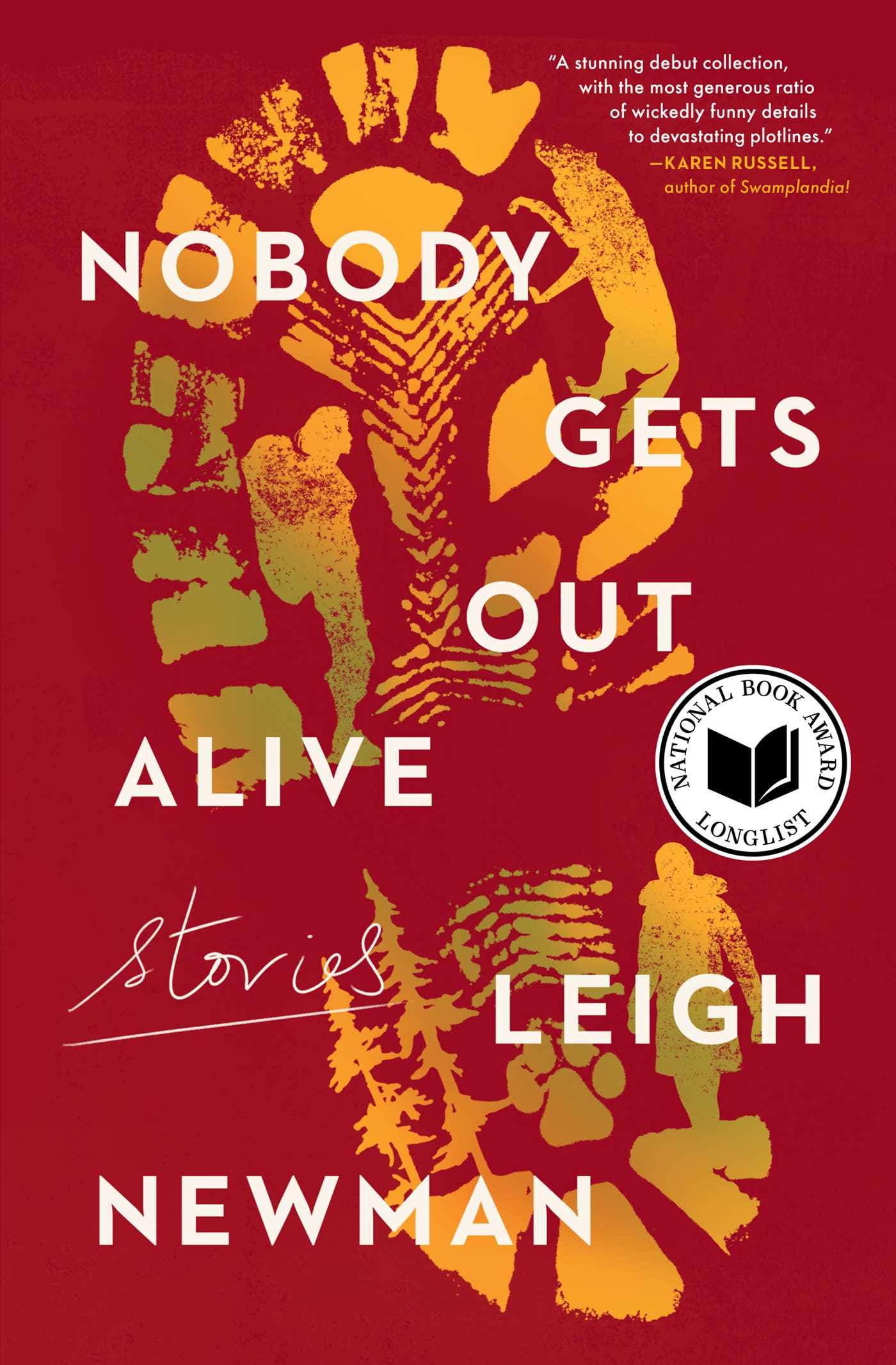
Nobody Gets Out Alive: Stories by Leigh Newman
One of the themes I noticed that ran throughout almost all of the books I read was how dangerous it is to be a woman in Alaska. That held true whether the story was contemporary, briefly in the past, or much older than Alaskan statehood. For anybody paying attention to the world today, that shouldn’t come as a surprise, but it was a surprise how consistently it came up.
That’s definitely the case in Newman’s collection of stories, as women encounter thwarted ambitions or outright danger, whether they’re in Anchorage, the largest city in the state, or far from civilization. The longest work, “Alcan, an Oral History,” shows a woman who is fleeing from an abusive man, taking her two children with her, attempting to drive from Alaska back to the lower 48. The story follows different perspectives, all of them female and all of them with their individual struggles. Some of those characters reappear elsewhere in the collection, though it’s not quite an interlocking work. The collection ends with “An Extravaganza in Two Acts,” a story set in the early twentieth century where Genevieve is supposed to be helping her supposed husband impress people, so he can become the chief engineer on the company town. However, she becomes more interested in Hazel, the wife of the person who will make the decision as to who will become that engineer. She fosters Hazel’s artistic ambitions, but she also seems to be interested in her romantically. Not surprisingly, the situation doesn’t work out as Genevieve might wish.
A number of the guides we met along our trip were female, and they talked about the challenges of living in Alaska, though never to the extent of admitting the violence that occurs there regularly. They sometimes used humor when talking about the ratio of men to women, using a well-worn expression, “The odds are good, but the goods are odd.” However, the women we met were more concerned with making a life than finding a man, and they thrived on the challenges that Alaska provides.
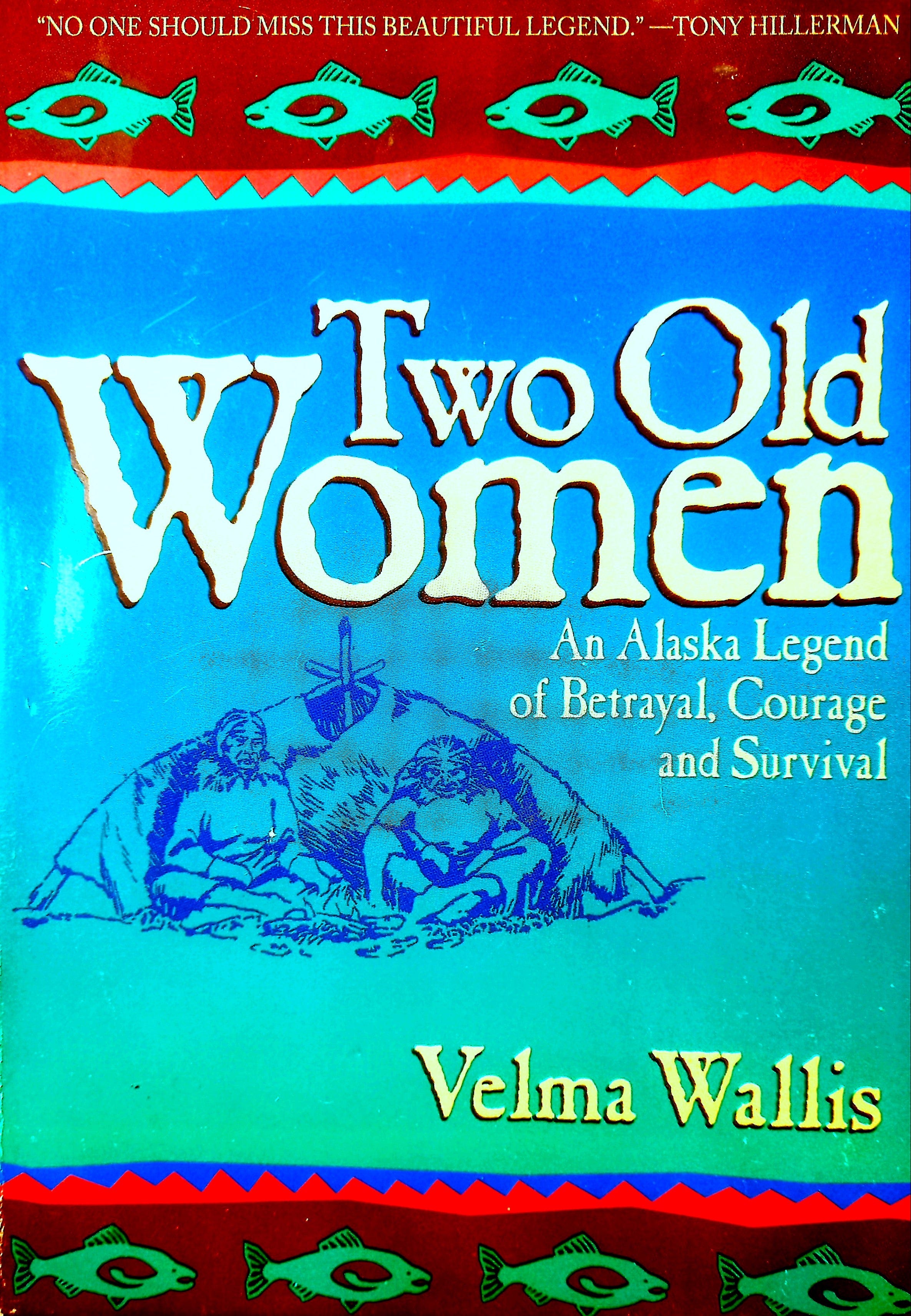
Two Old Women by Velma Wallis
Velma Wallis was raised in a family that valued their Athabaskan heritage (see more on the term Athabaskan below), and she draws from that tradition in retelling this story. The People, as she refers to them, are suffering from cold and hunger, as they haven’t been able to keep up enough of a food supply, and members are beginning to die. Thus, they make the decision to leave two old women behind to die, as they believe those women can no longer contribute to the community. On one level, the women agree with that decision, but, of course, they also don’t want to starve to death in the cold. Thus, they draw upon their knowledge to try to survive the winter. It’s probably not giving too much away to say that they do survive, and, in fact, they thrive, showing the importance of the ancient knowledge they possess. As with most traditional tales, everybody learns a valuable lesson along the way.
During our time in Alaska, we had two rather different interactions with people from the Athabaskan tribe. The first was at the Alaska Native Heritage Center in Anchorage. There are recreations there of various buildings from a variety of the tribes in Alaska, and the guides are all of indigenous heritage. One of our guides was from what many people call the Athabaskan tribe, but she pointed out that that label came from whites, not from native people, who use the term Diné. She referenced various slurs and jokes that people use with Athabaskan (such as “as a trash can”), so she prefers the term Diné, not surprisingly. The center, by the way, walks through a variety of tribal groups that live in Alaska and the region around it.
Our other encounter came at the Riverboat Discovery Cruise in Fairbanks. It takes people down a section of the Chena River and essentially gives an overview of parts of Alaskan culture. It begins with a floatplane taking off and landing, moves to a dog musher, then ends at a recreation of a native village. As in Anchorage, the guides are all indigenous, as are those on the riverboat. The main narrator mentioned that he was Athabaskan, but didn’t talk about the controversy with the name at all. The riverboat cruise was clearly more designed for tourists (the boat holds a thousand people), while the center is more focused on education, so I understand that would be a distinction, but I was still disappointed that the cruise didn’t at least acknowledge the complicated history.
This is Chance! by Jon Mooallem
Mooallem’s nonfiction account covers the 1964 earthquake that is still the worst one in U.S. history, registering 9.2 on the Richter Scale. The best decision Mooallem made was to focus solely on Anchorage, centering the book around Genie Chance, a part-time reporter who became the voice of the event. Mooallem certainly includes other people who were heavily involved, but by narrowing his focus, he helps create a tighter narrative. Similarly, he only focuses on the three days of the quake, though he has brief sections on the month before and the week after to help provide context. One odd choice he makes is to refer to himself in the third person when he enters into the narrative. I understand why he makes that choice, especially to provide a sense of objectivity, but it was still rather disconcerting.

It’s rather difficult to travel around Alaska without hearing about the earthquake, given the magnitude of its importance (I couldn’t resist that one). It literally reshaped the land. In fact, when we were in Anchorage, our tour guide took us to Earthquake Park where we could look out at the city and mountains, showing us the change that occurred during the earthquake. When eating lunch in Fairbanks, as well, there was a mural on the wall outside the restaurant that pointed out that one in ten earthquakes in the world happen in Alaska. According to The Earthquake Center, they detect an earthquake in the state every fifteen minutes, on average. Not only had I never heard about the 1964 earthquake, I had no idea Alaska had so many earthquakes. As if the cold didn’t make it challenging enough to live there.
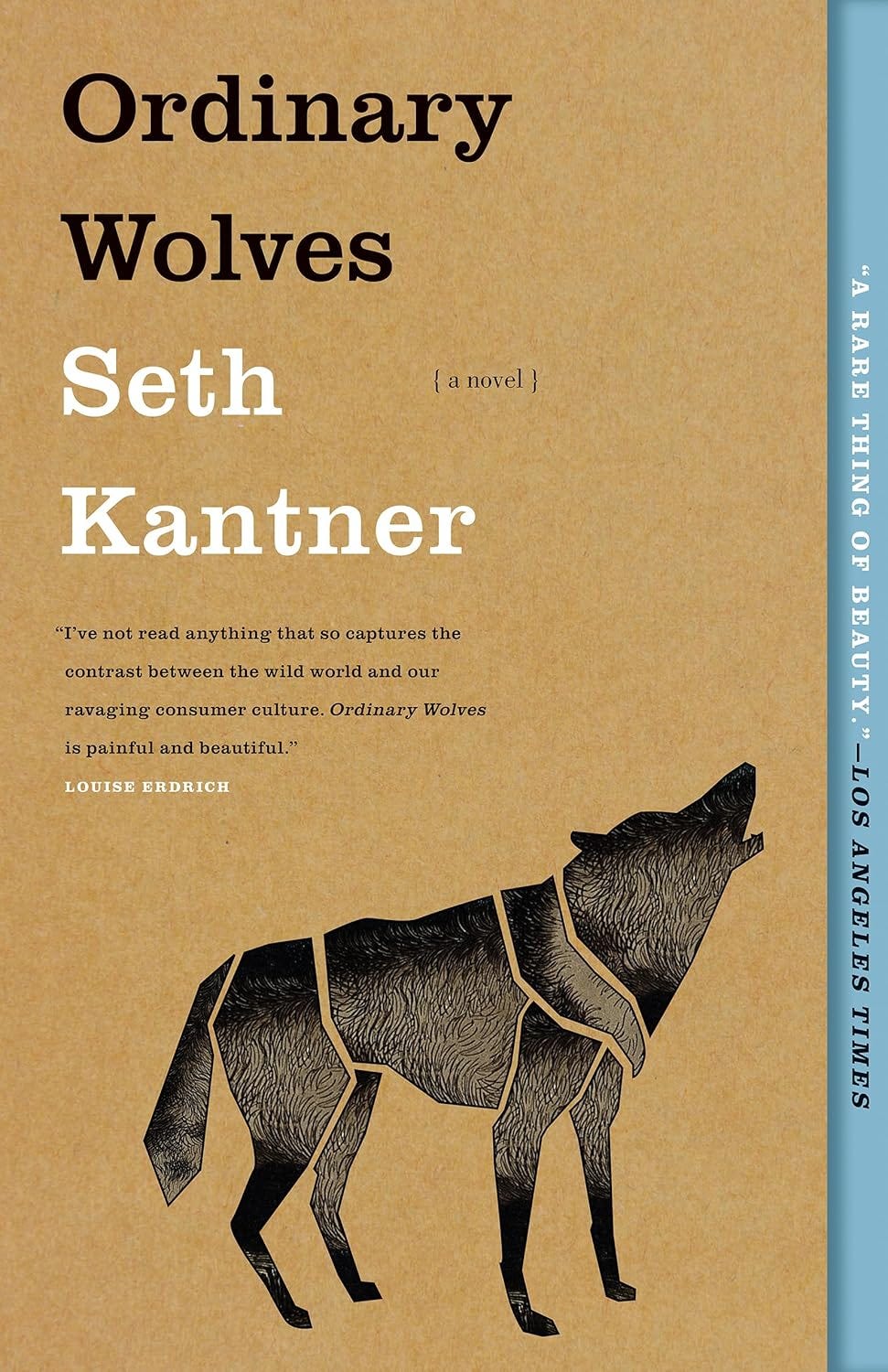
Ordinary Wolves by Seth Kantner
This 2004 novel won the Milkweed National Fiction Prize, but I had never run across it or Seth Kantner’s work. Kantner tells the story of Cutuk Hawcly, who grows up in rural Alaska. Kantner flips the racial dynamics in this story, as Hawcly and his family live near, but not in, an Iñupiaq village; thus, whenever he goes into the village, they make fun of him because of his race and appearance (the nicest term is “yellow hair”). He idolizes an Iñupiaq hunter, Enuk Wolfglove, so he hopes to continue living the remote life his father has chosen for the family, while his two older siblings leave for other opportunities. However, even the village begins to change, as government money, due to oil discoveries, brings in technology (especially snowmobiles, called snowgos) that disrupts the traditional ways of hunting. Cutuk has to decide between that traditional way of life he grew up with and adapting to the changing times, possibly even leaving, to discover who he really is.
Not surprisingly, we didn’t meet any people who live as Cutuk’s family did, but we did learn a good deal about dog mushing, which is an important part of Kantner’s novel. We met an Iditarod racer who talked about raising sled dogs and the relationship mushers have with their dogs. In fact, his wife played a video clip of Iditarod racers responding to why they enter such a challenging race, and almost all of their first answers centered around their dogs. That’s definitely true for Cutuk and his family, as well.
The Great Alone by Kristin Hannah
I saw Hannah’s novel described as THE Alaskan novel, so I knew I wanted to include it, though it ended up being the next-to-last one I read. Like Kantner’s novel, it centers on rural Alaska, though it’s primarily set in the 1970s. Leni Allbright’s family moves to Alaska because of her father Ernst’s struggles. He has returned from Vietnam changed, prone to violence and alcoholism, so he struggles to interact with others and keep jobs. Ernst moves Cora, Leni’s mother, and Leni to Alaska because the father of one of Ernst’s former military friends gives him the house that his son once owned. While life seems to be looking up for them, the darkness takes its toll on Ernst. However, the family discovers a community there who is willing to help, at least as much as Ernst will allow them to. As in Kantner’s novel, Leni discovers who she is in the wilds of Alaska, and she thrives there. The one complaint I had with Hannah’s novel is the amount of hardship Leni faces, almost as if she needs more and more of it to prove who she really is. The leads the latter third of the novel to feel overly dramatic, at times.

As with Kantner’s novel, we certainly didn’t meet people living in rural Alaska, but we did continue to encounter people who live in very small towns (often under 1000 people, sometimes under 200) and often choose to live in what’s called a dry cabin, one without running water. Alaska continues to draw people who want to live in contact with the land, much as Leni ultimately does, people who kill their own meat and raise their own food. It would be easy to stereotype those people, but we met a wide variety of them, most of them women. While Hannah’s novel certainly shows women who suffer violence at the hands of men, she also shows how women survive and thrive in such a harsh climate.
The Yiddish Policeman’s Union by Michael Chabon
I hadn’t read this novel since it came out in 2007, so I had many of the details wrong. However, the one I did have right was the connection to Alaska. Chabon creates a fictional Sitka based on The Slattery Report (named after Harry A. Slattery, Under Secretary of the Interior under FDR) from 1939, which suggested that Alaska could become a refuge for Jews fleeing Europe. The plan argued that it would not only help save their lives, but also help Alaska economically. In Chabon’s novel, that plan was actually enacted, and Sitka has become a home for more than three million Jews. The main character, Meyer Landsman, is a detective investigating a homicide just two months before Sitka is supposed to revert to American control. Chabon loves to play with genre, so this novel is essentially a cross between a revisionist historical fiction and a traditional gumshoe detective novel, mingled with literary fiction.

Most of the time I was reading the novel, I thought, Has Michael Chabon ever been to Sitka? That’s not a critique of his writing as much as it is a credit to how completely he reinvents Sitka to the revisionist history. Needless to say, there was no connection between the Sitka I saw and Chabon’s, save for the references to canneries and salmon, as well as the complicated interactions with indigenous people. I included it just because I read it, and it’s a solidly good novel, overall, but it didn’t help me understand Alaska.