
Given No Choice
Book explores the contentious history of abortion in the United States

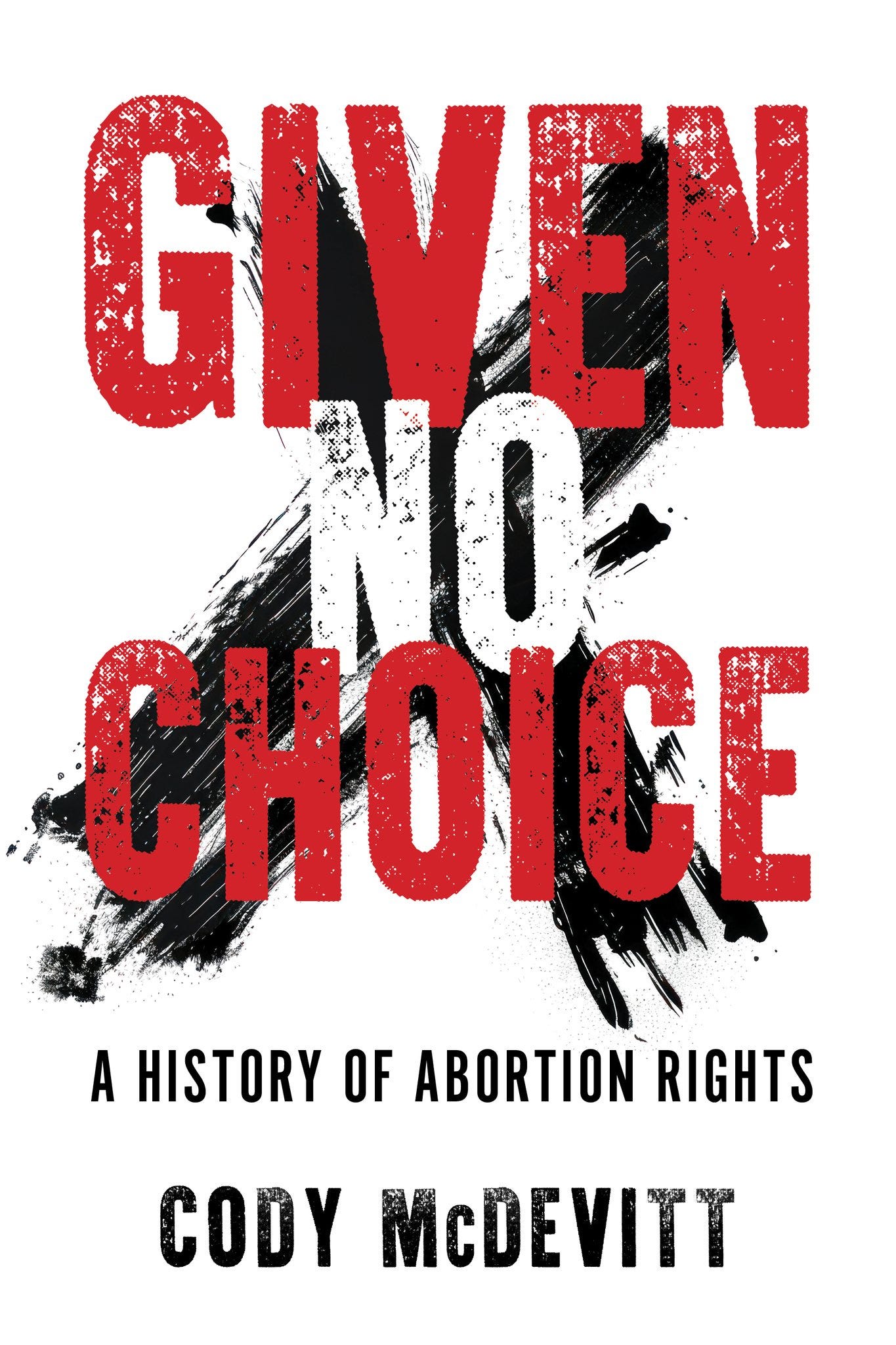
Given No Choice: A History of Abortion Rights, By Cody McDevitt, 2026, Available from Amazon and IngramSpark, 398 pages, $22.99 paperback; $29.99 hardcover; $9.99 e-Book. Release date: March 28, 2026.
Journalist Cody McDevitt spent nearly seven years researching Given No Choice, a book, he writes in his Introduction, that is meant to “provide the next generation of feminists with a primer on reproductive rights history.” The book centers on abortion – the most contested reproductive right – and tracks legal developments in federal efforts to regulate when and how abortion care is provided. It also zeroes in on state legislation and ongoing attempts by anti-abortion zealots to curtail access.
It’s a good introduction to the topic. Nonetheless, the book gives short shrift to grassroots organizing by feminists, healthcare activists, and the broader prochoice community to promote abortion as a social good. What’s more, the book sidesteps efforts by groundbreaking organizations like the Committee to End Sterilization Abuse, founded by Dr. Helen Rodriguez-Trias in 1970, to address the spate of forced sterilizations on unwitting Puerto Rican women both on the island and in the United States. Subsequent efforts by groups, including the relatively short-lived Committee for Abortion Rights and Against Sterilization Abuse (CARASA) and Reproductive Rights National Network are also ignored. Nonetheless, these groups were groundbreaking in their work to link the right to abortion to the social supports necessary to enable childbearing, among them affordable and available medical care, nutritious food, housing, childcare, and contraception, and they deserve a place in the history of efforts to maintain and expand reproductive justice.
Their omission leaves a significant gap in McDevitt’s narrative. What’s more, the book mentions, but does not dwell on, the Herculean efforts of today’s activists to raise funds so that people living in states without abortion access can obtain care in places where procedural abortion [sometimes called surgical abortion] is legal. Lastly, while the book covers right-wing efforts to ban medication abortion using the two-pill regimen of mifepristone and misoprostol, the domestic and international networks working to ensure medication availability also get scant attention.
Despite these flaws, Given No Choice highlights the contested terrain that has long surrounded abortion politics and provides much fodder for thought and mobilization. It’s a worthwhile addition to all reproductive justice collections.